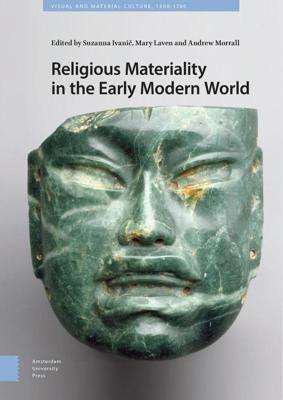
Religious Materiality in the Early Modern World - Suzanna Ivanic, Mary Laven, Andrew Morrall - ebook108,99
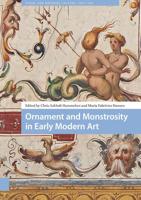
Ornament and Monstrosity in Early Modern Art - eBook (9789048535873)Sixteenth-century art features a remarkable fascination with ornament, both as decorative device and compositional strategy, across artistic media and genres. Interestingly, the inventive, elegant manifestations of ornament in the art of the period often include layers of disquieting paradoxes, creating tensions - monstrosities even - that manifest themselves in a variety of ways. In some cases dichotomies (between order and chaos, artificiality and nature, rational logic and imaginative creativity, etc.) may emerge. Elsewhere, a sense of agitation undermines structures of statuesque control or erupts into wild, unruly displays of constant genesis. The monstrosity of ornament is brought into play through strategies of hybridity and metamorphosis, or by the handling of scale, proportion, and space in ambiguous and discomforting ways that break with the laws of physical reality. An interest in strange exaggeration and curious artifice allows for such colossal ornamental attitude to thriv…78,99
Neo-Latin commentaries and the management of knowledge in the late middle ages and the Early modern period (1400-1700) - - ebook59,50
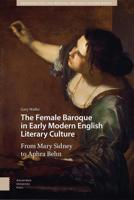
The Female Baroque in Early Modern English Literary Culture - Gary Waller - eBook (9789048551118)The Female Baroque is a contribution to the revival since the 1980s of early modern women's writings and cultural production in English. Its originality is twofold: it links women's writing in English with the wider context of Baroque culture, and it introduces the issue of gender into discussion of the Baroque. The title comes from Julia Kristeva's study of Teresa of Avila, that 'the secrets of Baroque civilization are female'. The book is built on a schema of recurring Baroque characteristics - narrativity, hyperbole, melancholia, kitsch, and plateauing, pointing less to surface manifestations and more to underlying ideological tensions. The crucial concept of the Female Baroque is developed in detail. Attention is then given particularly to Gertrude More, Mary Ward, Aemilia Lanyer, The Ferrar/Collet women, Mary Wroth, the Cavendish sisters, Hester Pulter, Anne Hutchinson, Margaret Cavendish and Aphra Behn, the latter two whose lives and writings point to the developing cultural tran…104,99