Asset Freezing at the International Criminal Court and the United Nations Security Council - Daley Birkett - ebook84,50
Linking High-Level Accused to Sexual and Gender-Based Crimes in International Criminal Law - Sylvester Sammie - eBook (9789051897937)Linking High-level Accused to Sexual and Gender-Based Crimes in International Criminal Law focuses on the theoretical and practical perspectives taken by the ICTY, ICTR, and ICC. It seeks to answer the question of how high-level officials can and should be investigated and prosecuted for their role in the commission of sexual and gender-based crimes. The author examines the forms, types, and amount of evidence used to prove the role of these high-level accused in the commission of crimes by rank-and-file soldiers. As the accused are usually not present on the crime scene, the international criminal courts and tribunals must rely on individual criminal liability theories enshrined in Article 7 ICTY Statute, Article 6 ICTR Statute, and Articles 25 & 28 Rome Statute to connect them to the atrocities committed on the ground. 100 individual cases from the ICTY, ICTR, and ICC are examined and reveal that in most cases there was sufficient evidence to prove that sexual and gender-based crimes…136,05
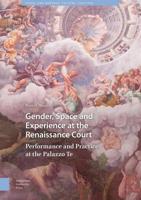
Gender, Space and Experience at the Renaissance Court - Maria F. Maurer - eBook (9789048536689)Gender, Space, and Experience at the Renaissance Court investigates the dynamic relationships between gender and architectural space in Renaissance Italy. It examines the ceremonial use and artistic reception of the Palazzo Te from the arrival of the Holy Roman Emperor Charles V in 1530 to the Sack of Mantua in 1630. This book further proposes that we conceptualise the built environment as a performative space, a space formed by the gendered relationships and actors of its time, asserting that the Palazzo Te was constituted by the gendered behaviors of sixteenth-century courtiers, but it was not simply a passive receptor of gender performance. Through its multivalent form and ceremonial function, Maria F. Maurer argues that the palace was an active participant in the construction and perception of femininity and masculinity in the early modern court.94,99